
Finally! A study that shows that purpose-driven brands make more money. It uses social listening among US marketers and customers, and online polls of American marketers, consumers and business buyers. The research was conducted between July and October 2025, by Craig Charney on behalf of the AMA New York, repeating an earlier study from 2021. I had the enjoyable experience of participating in a panel discussion of the results.
The results show that Purpose not only leads to an increase in sales but also make it possible to charge a price premium. Most surprisingly, engagement with Purpose is growing, despite a 37% cutback in brands’ expenditure on Purpose related initiatives.
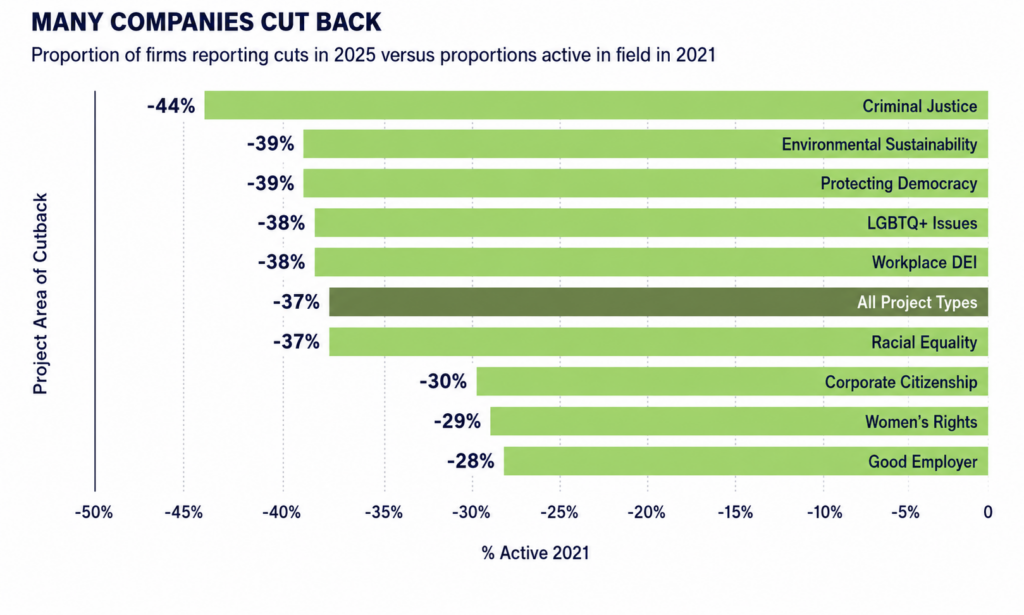
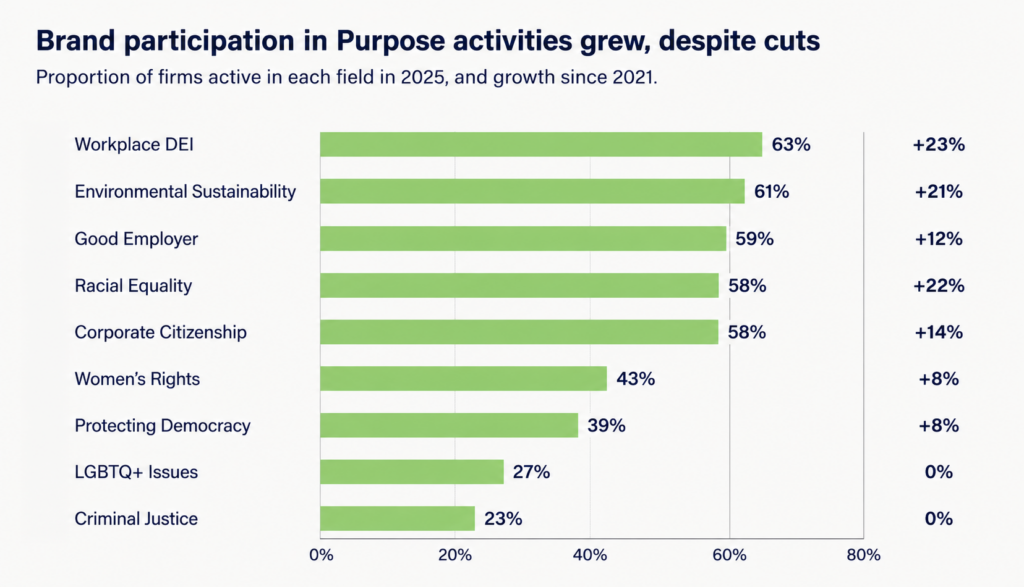
Engagement grew in most areas, especially DEI, racial equality and sustainability. The most politically contentious areas, LGBTQ+ and Justice, suffered the largest cuts and showed zero growth, but no decline in companies’ activities.
Brand participation in Purpose activities grew, despite cuts
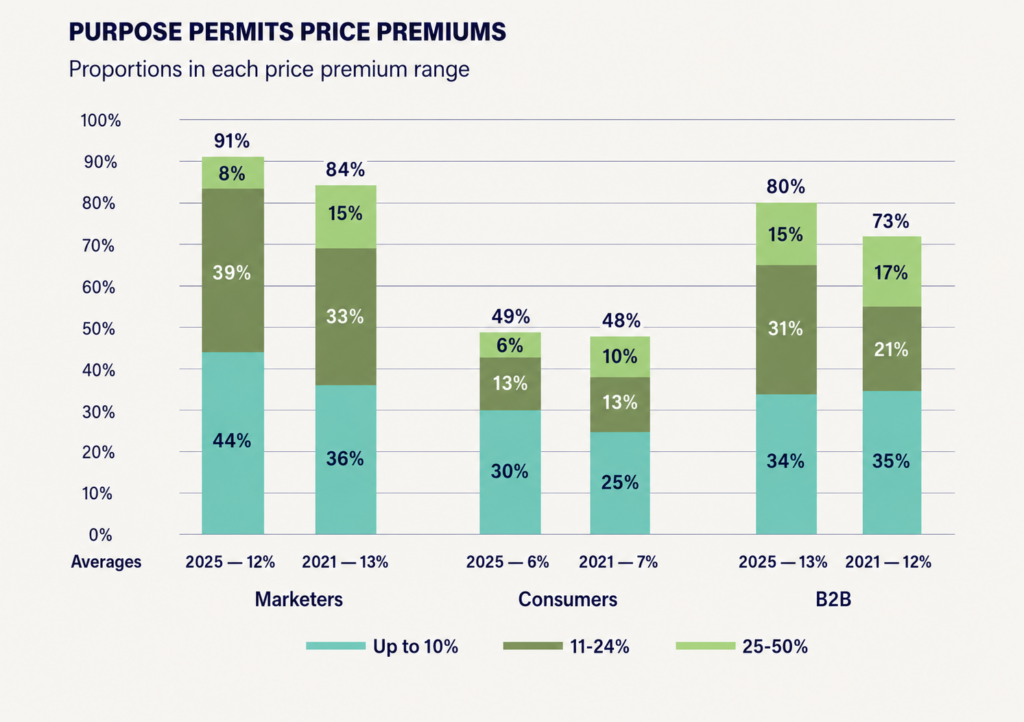
All audiences say that Purpose sells. Marketers estimate that Purpose drives the purchase decision 70% of the time, and that over 90% of their customers will pay a price premium for purpose-drive brands.
Purpose plays a larger part the purchase decision for B2B customers than consumers. 80% of business buyers will pay more for purpose-driven brands, up from 73% in 2021, with an average price premium of 13%, compared to 50% of consumers, with an average price premium of 6%.
What drives B2B buyers to care about Purpose?
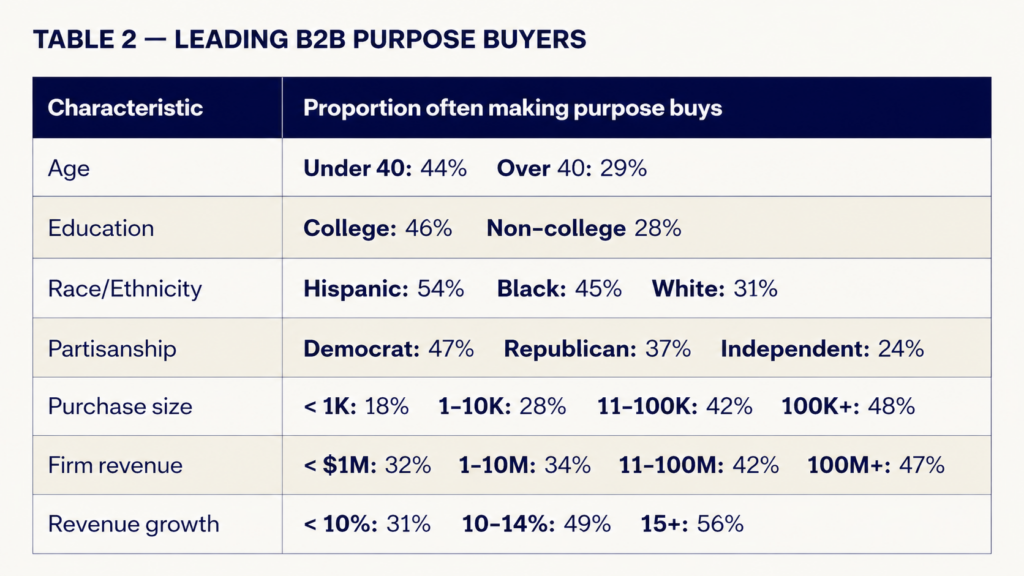
- Purchase size. The importance of Purpose is directly related to the level of investment. Purpose plays a key role in 44% of B2B purchases over $100k. versus only 18% for those less than $1K.
- Buyer Demographics. Age plays an important part. GenZ business buyers are much more likely to make purpose driven buys – 44% of the under 40s do this often, compared to 29% of the over 40s.
- Company size and growth. Larger companies are more likely to consider Purpose in their purchase decisions than smaller ones. So are companies doing well and growing faster.
The research shows that cynicism about the authenticity of companies’ commitment to Purpose is growing. Customers are demanding real-life proof that brands are sincere, commitment demonstrated not just by words, but by concrete actions. The proportion of buyers viewing Purpose commitments as very sincere has fallen from 34% to 24% for business customers and from 17% to 9% for consumers.
Why are people growing more cynical and becoming more demanding? This is the key point that the research does not tackle. It falls for a common misunderstanding. The study doesn’t talk about Brand Purpose, but about many purposes – DEI, environmental sustainability, racial equality, corporate citizenship etc. But a brand can only have one Purpose. The research confuses Brand Purpose with what used to be called Corporate Social Responsibility and is now commonly called Sustainability or DEI. This is only part of the story and not the most important from a brand point of view.
Purpose-driven brand initiatives at Procter & Gamble
The explanation of how this confusion arose goes back to work I and my team did supporting Jim Stengel (then CMO of P&G) and Marc Pritchard (at that time Jim’s Chief of Staff and subsequently CMO). This study originated the concept of Brand Purpose. The task was to answer two questions:
- Which brands (not P&G brands, any brands anywhere in the world, define brand as you wish) have built the greatest financial value over the past 7 years?
- What was it they did that made them so successful?
We used brand valuation and the BrandZ database to answer the first question, then delved into the strategies of the winning brands and came up with a set of common principles which they shared. The lead principle was what was initially called the Brand Ideal, but P&G decided to rename Brand Purpose. What does this mean? The world’s most successful brands are based not on product features but on a higher ideal, one that taps into universal human values. They put the ideal out there and invite their audiences in, to participate in it. A brand can only have one ideal or purpose and it must be one that embodies why it exists, as is relevant and authentic to their brand. It must be brought to life in everything the company does, through concrete actions.
Confusing Brand Purpose with CSR
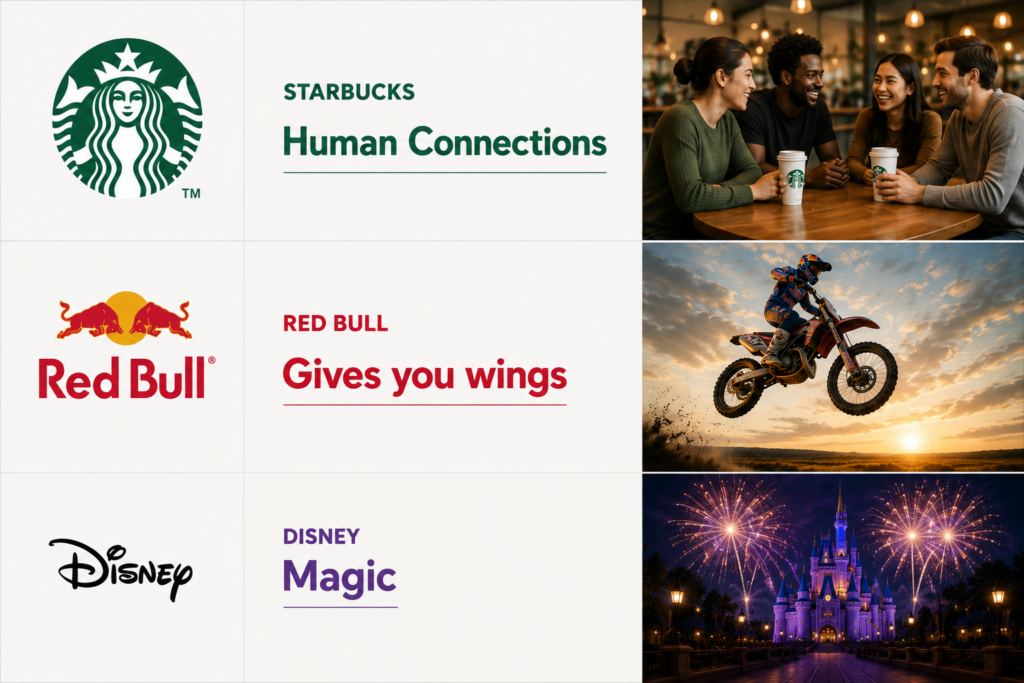
Since the objective of the Brand Purpose is to make the world a better place, it does link in here to CSR type objectives, However, these must only be ones that fit with the brand. The Brand Purpose is not a generic DEI factor. Thus, for Disney, the Brand Purpose is ‘Magic’, for Starbucks ‘Human Connections’, for Airbnb ‘Belonging’, for Corteva Agriscience ‘Growing Progress’.
The confusion between Brand Purpose and generic Sustainability/DEI initiatives encouraged brands to pay lip service to Purpose and given rise to the growing skepticism.
Transforming a business: Dove as a purpose-driven brand
A successful Brand Purpose can transform a business. Perhaps the best example is Dove. Dove used to be just a moisturizing bar of soap (it is, it has oil in it) and was marketed as such. The brand was limited by its positioning to bars of soap and had little to no differentiation in the commoditized soap category. The brand repositioning to ‘Real Beauty’ hugely increased the Dove’s appeal. Sales grew 60% – from approximately $2.5 billion to around $4 billion within three years. This was exceptionally fast growth for a mature consumer packaged goods brand and made Dove one of the fastest growing brands within the Unilever portfolio.
What was even more extraordinary was what happened next. The repositioning opened the floodgates for expansion. The Brand Purpose of ‘Real Beauty’ – the idea of giving all women the confidence to be beautiful, translated easily across categories and continents. Freed from the shackles of product features, Dove was able to enter body wash, deodorants, hair care skin care, baby products and men’s care. Today Dove is one of Unilever’s largest “Power Brands,” with sales of almost $7 billion, more than doubling in size since the brand repositioning.
Fit makes a difference when it comes to Purpose and brand
Choose a purpose that doesn’t fit with your brand and the business can go the opposite way. Bud Light represents a dire warning. It was the leader in the US beer market, with a share of over 10% and had been America’s best-selling beer for over 20 years. But then, in 2023, Bud Light used the transgender social influencer Dylan Mulvaney to promote the brand. It was a debacle. Talk about jumping on a purpose bandwagon that didn’t fit with the brand! Bud Light’s brand heartland is mid-West, white, macho male. They deserted in droves. Sales dropped by 25-30% within 3 weeks. A year later, market share had fallen to 6.5%. The brand has not recovered. It is now in third place, behind Modelo Especial and Michelob Ultra.
What does this mean for brand owners? Invest in purpose-driven branding. But make sure it’s the right Brand Purpose. The right one will pay you huge dividends.