

by Nikhil Gharekhan, Managing Partner, Presciant
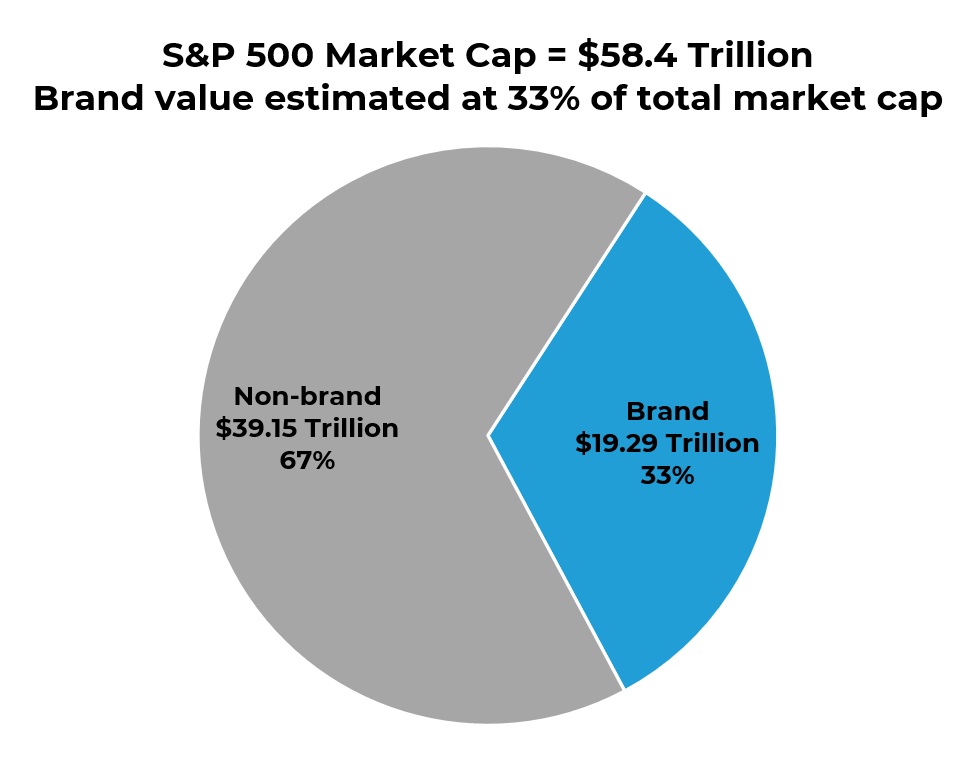
Marketers are constantly reminding anyone who will listen that their brands are important assets for their company. But there are still some who do not actually put a dollar value on their brand. They should. The total value of the brands in the S&P 500 is estimated at $19.3 trillion, which is about 33% of total market cap. Applying even that average ratio to your company’s valuation will get the attention of your CFO. Doing a proper brand valuation will help even more—it will reveal insights on how to grow brand value and give you a business case for investments. Our recent article outlined different methodologies that can be used to properly measure brand value.
But how do brands actually drive that value? The intuitive answer is to say that brands attract customers and therefore help to generate sales. But it goes much deeper than that. Here is how brand impacts financial value drivers your CFO looks at in balance sheets, income statements and cash flow statements.
Financial value drivers impacted by brand
- Revenue: Brand is a set of psychological associations that customers have with a company or product which leads them to prefer it over others. A strong brand attracts new customers, encourages existing customers to buy more, retains customers longer, and reduces customer switching. All of this directly results in greater revenues.
- Cost of Goods Sold (COGS): A strong brand signals market power to the company’s stakeholders upstream in the supply chain, such as materials and components providers. This economic clout results in more favorable supplier rates for the company, thereby lowering cost of goods sold.
- Gross Margin: A strong brand allows a company to charge a premium for its products and services. Essentially, the power of the brand enables the company to shift the demand curve in its favor. Higher prices without loss of demand, combined with decreases in COGS (Cost Of Goods Sold), result in greater gross profits and margins.
- Selling, General & Administrative Costs (SG&A): A brand with a clear proposition and recognition in the marketplace makes marketing efforts more efficient, attracting and converting new customers at lower cost. These lower costs directly translate into reducing a company’s SG&A line item on the income statement.
- Operating Expenses (OpEx): With a strong brand, a company is able to attract the best talent, and employees tend to stay longer. Companies are able to get away with not paying the highest salaries. Employees in companies with strong brands are also naturally motivated to work harder, increasing their productivity. This talent efficiency results in lower Selling, General & Administrative (SG&A) costs, lowering OpEx.
- Working Capital: Brand can also positively impact the cash and liquid assets a company has available to fund its day-to-day operations. With a strong brand, a company has greater leverage to command more favorable payment terms—shorter accounts receivable timeframes from its distributors and customers, and longer accounts payable timeframes to its suppliers. These combine to increase the Working Capital on hand in the balance sheet.
- Capital Expenditure (CapEx): With a strong brand, a company can reduce its capital cost of entry into new categories. Instead of investing in additional Property, Plant & Equipment (PP&E), it can license its brand to another company already operating in that category. This allows the company to open up new revenue streams while keeping Growth CapEx under control.
- Competitive Advantage Period (CAP): This is an important, but often neglected financial driver, and is defined as the amount of time a company can earn returns above the cost of capital on new investments. A strong brand with a clearly defined positioning helps create differentiation in the marketplace and overcome commoditization. This extends the lifespan of a company’s or product’s economic moat, giving it more enduring above-average profits.
- Cash Tax Rate: A company with a strong brand is able to create a centralized entity that owns the brand IP in a low-tax jurisdiction. Other operating subsidiaries in higher-tax jurisdictions across the globe pay royalties to the IP-owning entity. The royalty expenses are deductible for these subsidiaries, lowering their income in high-tax regions. The royalties act as income for the licensor entity, but this income is taxed at a lower rate, effectively lowering the overall corporate tax rate.
- Weighted Average Cost of Capital (WACC): Companies with stronger brands are treated by investors and creditors as safer investments. This perception of reduced risk means that they require lower returns, lowering the cost of debt and equity. Stronger brands also enable companies to enjoy better credit ratings, resulting in lower interest rates on debt and better financing terms. A strong brand can create a 2 basis-point increase on bond prices.
- Market Cap and Share Price: Across the financial drivers reviewed above, a strong brand helps a company deliver earnings growth. Equally important is the perceptual factor. A strong brand with enduring differentiation makes investors willing to pay more for each dollar earned, increasing the price-to-earnings (P/E) ratio based on future expectations. These increased valuation multiples drive share price and market cap growth.
Marketers are right to treat their brands as valuable assets. But they need to use financial language to make their case to the rest of the organization. For more on how to do this, contact us.