

by Hugo Isert and Ryan Ramsden
Todays reports that Elon Musk is weighing up a merger between SpaceX and xAI (owner of Grok) is being primarily reported as a decision focused around technology and capital markets. In reality, this decision may be a key indicator of how brand is being treated, and priced as a financial asset.
At a brand level, SpaceX and xAI exist for very different purposes. SpaceX’s brand competes with NASA in its mission ‘to make humanity multi-planetary’ where trust, neutrality and credibility are essential in their revolutionization of space technology.
xAI’s brand is insurgent and visible. Through Grok, they are positioned as a deliberately provocative challenger to AI norms, closely entangled with the cultural dynamics of X.
Space X’s future valuation rests not so much on its current revenues but more so on trust to deliver critical space infrastructure at scale. This trust comes from governments, defence agencies and commercial partners which rely on Space X for innovation as well as a sense of neutrality in the very tense current geopolitical environment. Combined with stable governance, this trust underpins SpaceX’s long-term contracts and investor confidence, ultimately defining valuation.
An IPO would formalise this brand equity into a publicly traded asset. When SpaceX does eventually come to market later this year, the size and reception of the offering will reflect how markets assess the durability of this trust.
The rationale for this merger isn’t about short-term synergies. xAI frames itself around embracing the most challenging obstacles by always pushing the limits of what is possible. When that ambition is placed next to SpaceX, the narrative becomes one of extending beyond rockets and connectivity into the intelligence that might eventually run on Mars. The merger gives Musk a long-term growth narrative.
However, how does tying SpaceX to Grok impact the risk profile of the future IPO? Well, Grok’s controversial brand identity is deliberately provocative and closely linked to the largely unregulated social platform, X. Despite what might seem like offering a more synergised ‘X’ brand, this positioning introduces huge reputational volatility for SpaceX. This concern has precedent. In 2016, Walt Disney Company executives reportedly walked away from a potential acquisition of Twitter after concluding that its cultural reputational volatility were incompatible with Disney’s role as a trust-based, family-safe brand. Even without operational integration, ownership alone was seen as sufficient to contaminate trust, leading Disney to abandon the deal.
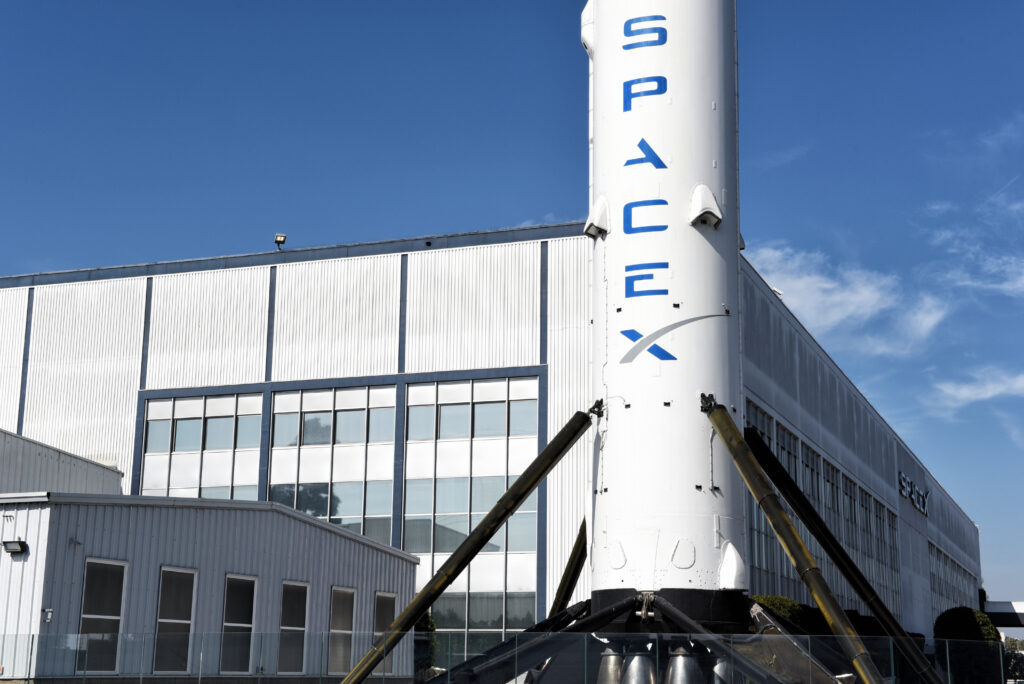
This risk is already evident, with Keir Starmer stating that a ban on Musk’s X platform is “on the table” following the circulation of Grok-generated sexualised images in the UK earlier this year. If SpaceX becomes structurally chained to Grok, the market would no longer assess it purely as an innovative aerospace infrastructure company. Instead, it would more tightly form Elon Musk’s broader, and increasingly politicised, technology ecosystem, with his personal sovereign brand acting as the connective tissue.
From a brand valuation perspective, this shift matters even if revenues do not change. Brand controversy introduces un-needed uncertainty which in-turn raises the discount rate of future earnings.
But Musk may argue, risk may be worth it for the reward. As he said in Davos last week, “the lowest cost place to put AI will be in space. And that will be true within two years, maybe three at the latest”, driven by unrestricted solar energy and long-term infrastructure economics. Integrating Grok reinforces the narrative of SpaceX as a brand that is willing to push the unthinkable boundaries across space, connectivity and now AI.
Assuming the reports are accurate, and the merger does go ahead, time will determine whether SpaceX’s brand can absorb Grok and still function as a trust-based financial asset, or whether political and regulatory risk seeping from Grok erodes the valuation premium. In either outcome, the market’s response to the IPO will make one thing clear, brand is no longer a narrative choice, it is a priced input to financial value.
From a brand perspective, it is difficult to see where the upside outweighs the risk, leaving open the question of what problem Musk is trying to solve with this merger.