
Back in 2017, a marketing PhD student, Alireza Alizadeh at the Tarbiat Modares University in Tehran reached out to the American Marketing Association about opening a chapter. That wasn’t possible. But his observations in an article titled “What Are the Top Iranian Brands?” about Iran’s economy and brands were razor-sharp, and now, in the middle of an active shooting war, they read like prophecy
Here’s what Alireza wrote:
What are the top Iranian brands? That’s a good question!
The Iranian economy is different from the U.S., and that affects branding. Eighty-five percent of our economy is governmental, therefore our private sector is weak and very small.
Our country has the potential to be a very wealthy country, with rich resources in oil, gas, mines, nature, a vibrant history and, most importantly, a young, educated, eager population. Our current system does not maximize this potential. Brands are generated in competitive, creative environments, which we do not have in Iran.
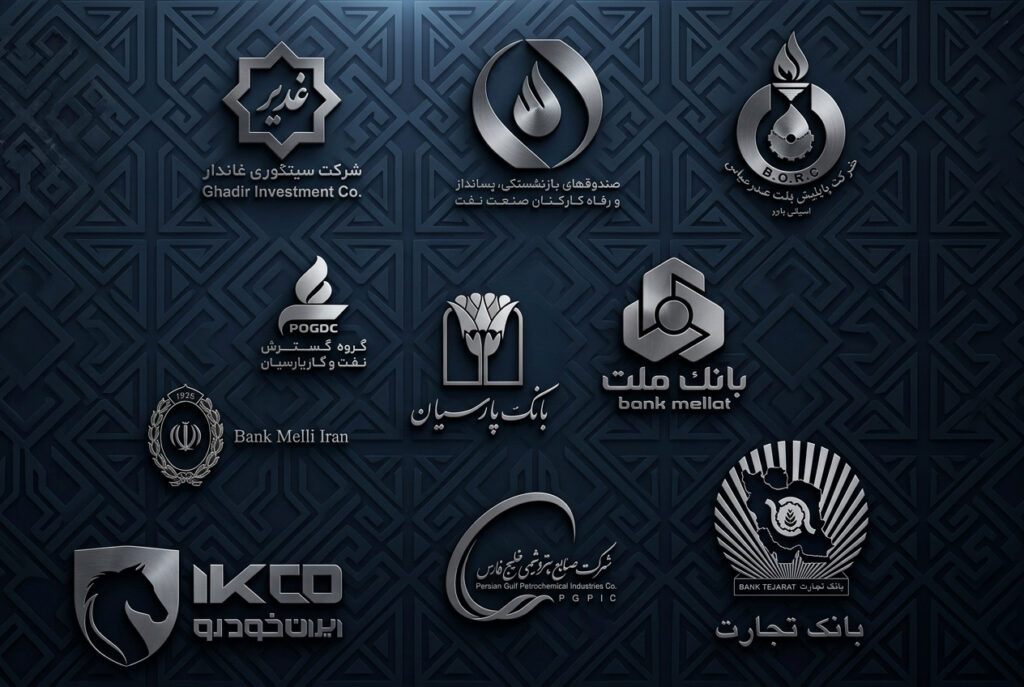
We do have large companies in Iran, but no real Iranian brands. Even in the oil and gas industry, with a proud history going back 113 years, offers no effective brand. Our largest companies, without brands, are not well-known outside Iran, and even inside, have no positioning or personality:
1- Melli Bank Holding ($9 billion annual sales)
2- Khalije Fars Petrochemical ($8 billion annual sales)
3- Mellat Bank ($7.9 billion annual sales)
4- Ghadir Investment Company ($7 billion annual sales)
5- Iran Khodro Automotive ($6.8 billion annual sales)
6- Parsian Bank ($6.7 billion annual sales)
7- Tejarat Bank ($6.5 billion annual sales)
8- Parsian Oil and Gas Company ($6.4 billion annual sales)
9- Oil Industry Retirement Fund ($6.1 billion annual sales)
10- Bandar Abbas Refinery Company ($5.9 billion annual sales)
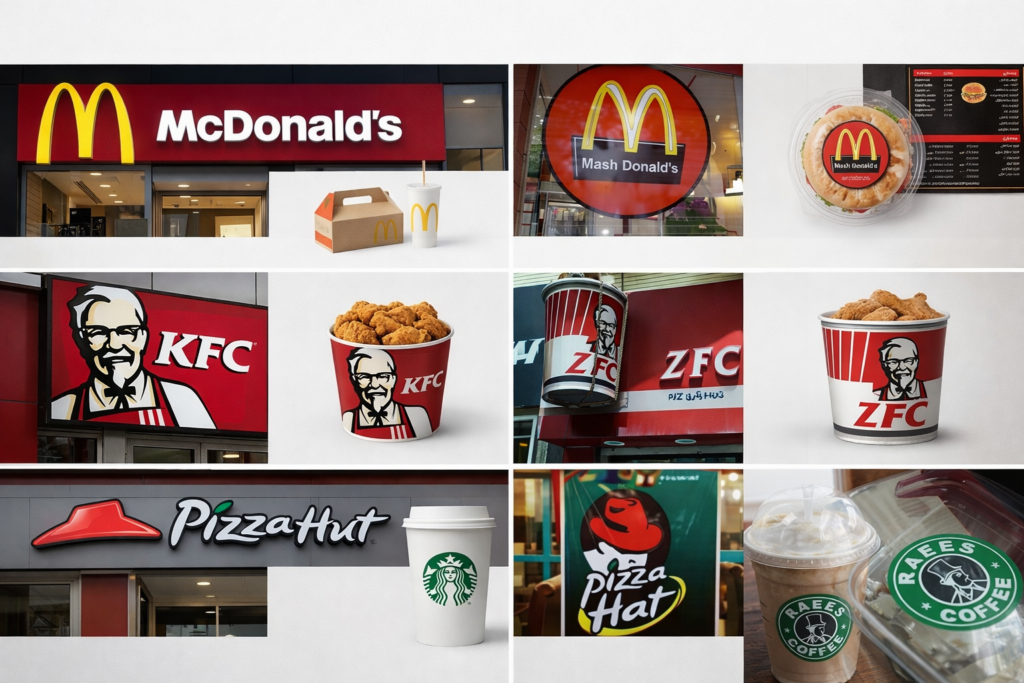
We don’t just lack Iranian brands, but American brands, too. Most American brands are forbidden in our country. We do have bootleg brands, like Pizza Hat and Mash Donald’s. Brands from Europe and the Far East are well represented, including Sony, LG, Samsung, BMW, Benz, Hyundai, Unilever, Volvo, Renault, Philips, Peugeot, Mitsubishi, L’Oreál, Siemens, Panasonic, HP, Epson, and others.
Recent evidence suggests change is coming to Iran. How and when that will happen is anyone’s guess. Economic change, however, will open commercial opportunities that will benefit individual Iranians and the country as a whole. Iran has great potential as a market for brands.
He was right then. And the situation has gotten infinitely more urgent since.
What’s Changed Since 2017? The whole world.
When Alireza wrote his piece, he politely noted “change is coming.” That was the diplomatic version.
Here’s the undiplomatic version:
As of January 2026, Iran is experiencing its deepest and longest economic crisis in modern history. International sanctions, domestic mismanagement, rampant corruption, and geopolitical instability have all converged, inflation hit over 48.6% in October 2025. Food inflation has reached 70%. On March 19, 2025, the exchange rate passed US$1 to 1,000,000 rials, making it the least valuable currency in the world.
In December, Iran’s economy collapsed, triggering widespread protests throughout the country. The regime violently repressed those protests, with death toll estimates ranging from 3,117 (per the Iranian government) to upwards of 36,500.
And then, at the end of February, Israel and the United States launched attacks on Iran, which resulted in the death of Supreme Leader Ali Khamenei. Attacks have already spread more widely, broadening the conflict to the entire Middle East and even the edge of Europe. The economic consequences are already being felt. Oil prices have shot up, given that the disruption affects about 20% of the world’s oil supply.
So, what does this mean for Iranian brands?
Iran isn’t just a geopolitical story. It’s the world’s biggest untapped brand market. 85 million people, a civilization thousands of years old with virtually zero global consumer brands.
That’s not a gap. It’s a canyon.
Iranian brands have faced numerous obstacles, including long-term inflation, international sanctions, currency depreciation, and migration of the skilled workforce. Government security and intelligence agencies have ramped up efforts to control startups and digital companies.
But despite all these obstacles (and in some cases because of them) a thriving internet economy grew up. Iran is one of the most tech-savvy societies in the developing world, with about 70 million internet users out of 85 million people. And this is where it gets interesting for anyone who thinks about brands for a living.
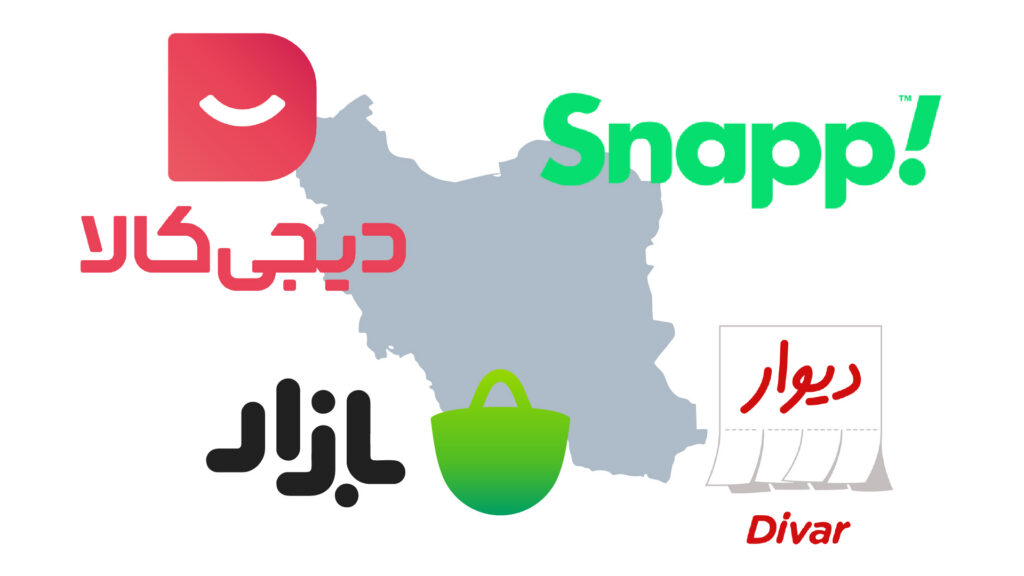
Because of sanctions, which cut out big brands like Amazon, Google and PayPal, a local startup, Digikala, has emerged. Digikala, has become the dominant ecommerce platform in Iran with 40 million monthly users (getting towards half the population), several 100 thousand marketplace sellers, millions of products, and 80-90% of Iranian ecommerce, with its own payments platform.
Snapp, the first and leading ride-hailing platform in Iran, has 20 million customers and 1 million drivers, completing more than 3 million rides per day.
Divar, a classifieds platform, has reached 20 million users. Café Bazaar, an Android app store, has 40 million users.
There are almost 4000 internet ventures, more than 150 venture investment firms and 250 incubators. Total venture investment in Iranian digital startups is estimated at $2B. The Iranian digital economy is estimated at almost $30B annually.
These startups aren’t just companies. These are proto-brands, born in constraint, built for scale, and now being deprived of oxygen. Iran is said to be losing more than $1.5M every hour because of the state-imposed internet blackout since the attacks, draining the digital economy, destroying the value of its nascent brands, and disrupting people’s lives.
The Brand Strategist’s Takeaway: Five Things to Watch
- The Iranian brand vacuum is historic. The Iranian marketing PhD student said it in 2017, and it hasn’t changed: a massive young population, a civilization that shaped the world, and not a single global consumer brand. When political conditions shift, the first-mover advantage for brand-builders, domestic and foreign will be extraordinary.
- Bootleg Iranian brands reveal latent demand. The observation about Pizza Hat and Mash Donalds wasn’t a punchline. It’s market research. Iranian consumers want branded experiences so badly they’re creating knockoff versions out of thin air, just as the Russians have done since Western brands were expelled there. The desire for brands doesn’t disappear in a crisis it compounds.
- Iran’s tech ecosystem is the brand incubator for the whole economy. Digikala’s funding originally included investment from Germany. Its success has served as a blueprint for integrating global capital with local innovation in emerging markets. The internet brands are the closest things Iran has to real brands.
- The country’s identity issues are a brand opportunity. Post-regime Iran, whatever form it takes will need new symbols, new identities, new stories. That is what brands do.
- Western brands investing in Iran will need patience. Even in the most optimistic scenario, building brands in Iran will require deep cultural intelligence, patient capital, and local partnership. This isn’t a land grab. It’s a long game.
The Bottom Line
Alireza asked in 2017: What are the top Iranian brands? The answer then and now is that there aren’t any. Not really. Not by global standards.
But that’s exactly the point.
The ripple effects of this moment will reshape the region for decades. When the war ends, commerce will begin again. And commerce is built on brands.
The nation that gave the world poetry, algebra, and saffron has no global brand to show for it. When the dust settles, the Iranian market will be one of the great commercial opportunities of our generation.
The question isn’t if Iranian brands will emerge. It’s who will build them.