

by Nikhil Gharekhan, Managing Partner, Presciant
Establishing the brand architecture organizing principle is one of the first steps in sorting out your brand architecture. The right organizing principle can generate billions of dollars and save a company from collapse. This is not hyperbole.
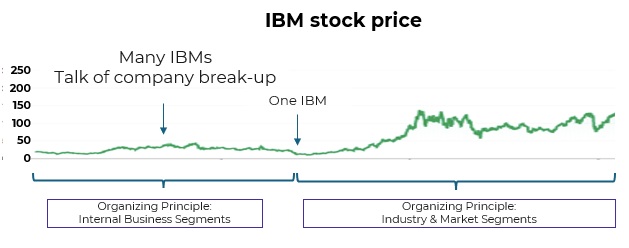
Consider IBM. When CEO Lou Gerstner arrived on the scene, the company’s stock was floundering and internal silos were rife. Marketing efforts were being wasted—one edition of The Economist featured print ads from 5 different divisions of IBM, each with a conflicting message! The prevailing wisdom was that Lou had been brought in to break up the company.
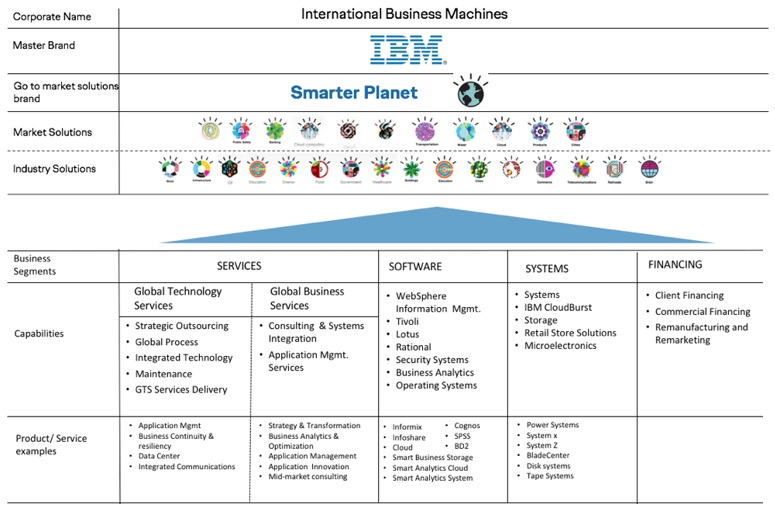
Instead, he radically transformed the company’s brand architecture organizing principle from one that focused on the internal business segments—services, software, systems, to one that focused on external market segments—customer needs and industries. This go-to-market strategy allowed Lou to reinvent the company from independent fiefdoms to One IBM, unlocking customer demand, eliminating customer confusion and accelerating cross selling. Investors applauded, and the company’s stock price rose 500% over the next decade.
What is a brand architecture organizing principle?
Before we dive into organizing principles, it is important to understand what brand architecture is. It is the external face of the company, the structure through which it offers up its products and services to customers and potential customers. It explains the relationship of its products and services to each other, and to the corporation which owns them.
An organizing principle is the fundamental element of a brand architecture. It is the overarching idea that guides the deployment of a company’s products and services. It informs the creation of distinct buckets or verticals into which the offerings can be sorted.
What makes a good organizing principle?
Selecting an organizing principle is not an academic exercise. The goal is to help customers understand and navigate around a company’s suite of offerings. A good organizing principle should be:
- Customer-focused: The organizing principle should reflect how customers instinctively think about and buy products and services in a specific category. It should not be internally focused or follow the organizational structure of the company.
- Future-oriented: An organizing principle should be enduring. It should accommodate not only the existing product and services of a company, but also anticipate future ones. It should be based on future trends not just current market conditions.
- Easy to understand: The best organizing principles are simple and intuitive. They should immediately draw the customer in, not be a barrier to understanding what the offer is.
- Complete: An organizing principle should result in buckets or verticals that encompass a company’s entire offer—current and future. The objective is to give customers visibility into the full portfolio.
- Create distinct buckets: The organizing principle should enable the creation of groupings that are mutually exclusive, so that there is no ambiguity as to which product falls into which bucket.
How does an organizing principle create financial value?
The most direct way in which an organizing principle works is to spur sales growth. Simply put, when customers understand what there is to buy in a way that fits with their needs, and find things easily, they are more likely to buy. In the transformed One IBM model, customers could now approach IBM with a specific need, e.g., cloud computing, and IBM would marshal all the necessary products, services, and capabilities to fulfill that need. One need mushroomed into multiple cross-sell opportunities.
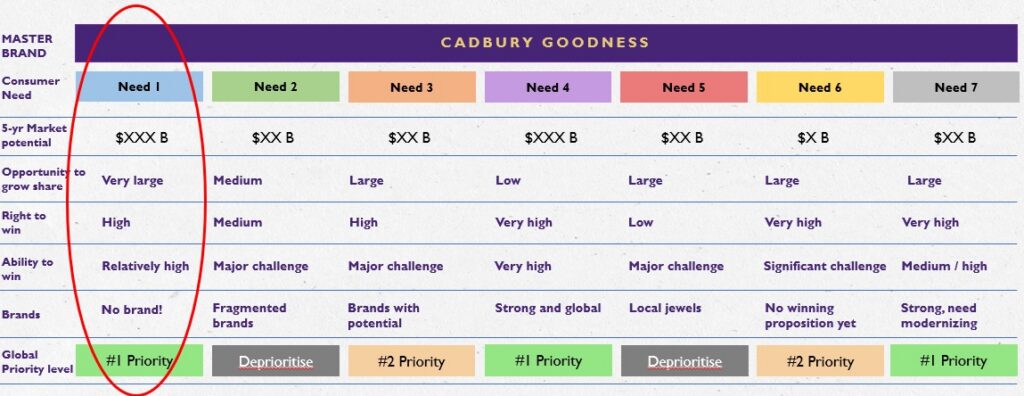
Establishing a customer-focused organizing principle can also identify new market opportunities. When Cadbury reorganized its portfolio using consumer need as the organizing principle, it uncovered a huge white space opportunity—nutrition bars. The most popular nutrition bars in the market are those made with chocolate. And that was a $55B addressable market which Cadbury was practically absent from!
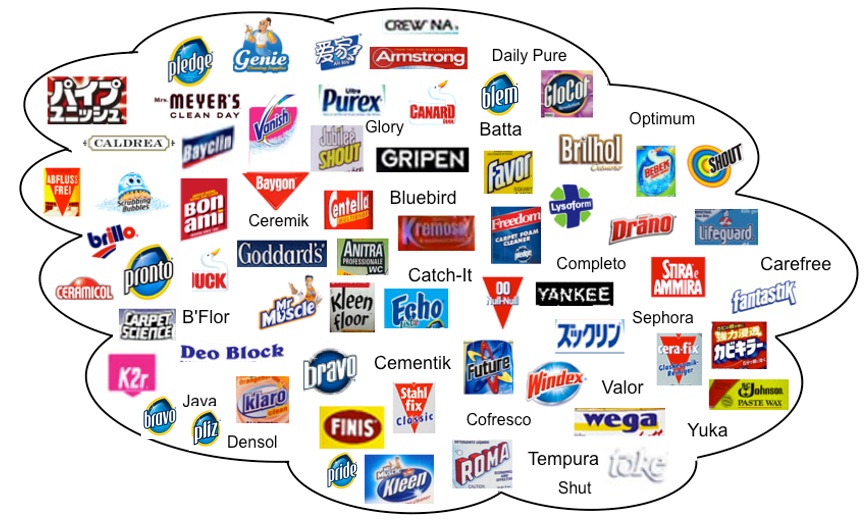
Sorting out a portfolio into clear buckets also creates financial efficiencies by identifying overlapping brands and messages. When SC Johnson looked at its portfolio holistically, it realized it had 86 different cleaning product brands across the globe. Reorganizing the portfolio according to consumer-oriented demand spaces resulted in the prioritization down to 6 major brands, each focused on a different demand space. This resulted in more than $1B in marketing efficiencies over a 5-year period.
What is the right organizing principle?
There is no right or wrong answer. It’s whatever makes sense and whatever best reflects customers’ purchase decision-making thinking. Here are some examples:
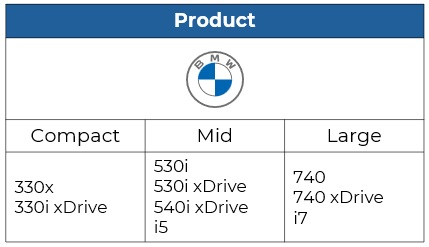
- Product: BMW organizes its portfolio by product type, starting with body size and style, then engine size, and other features such as all-wheel drive, extended cab and so on.
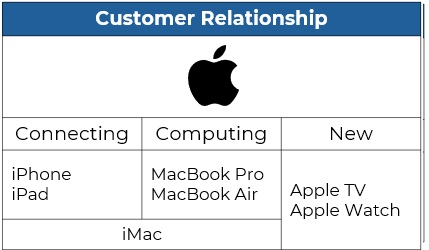
- Customer relationship: Among its legacy products, Apple organizes its offerings based on the customers’ relationship with the product. If they are primarily connecting online, then the product sub-brands start with the letter “i”, like iPhone, iPad. If they are doing computing, then they start with “Mac”. The iMac straddles both. With newer categories of products, Apple is the dominant Masterbrand.
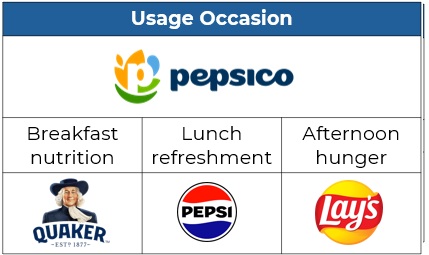
- Usage occasion: PepsiCo structures its portfolio by usage occasion, which is a blend of need, time, place, social context and desired benefit. So, start-of-the-day breakfast nutrition is represented by the Quaker brand, lunch accompaniment and refreshment is represented by the Pepsi brand, and afternoon snack hunger is represented by Lay’s.
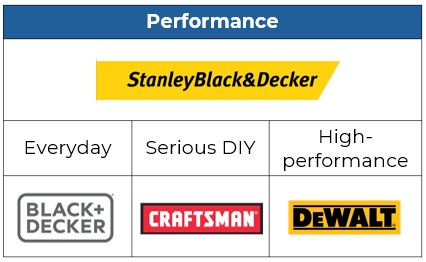
- Performance: Stanley Black & Decker, the tool manufacturer, is a good example of an organizing principle based on performance. Its portfolio starts with BLACK+DECKER for lighter everyday tasks, to Craftsman for serious do-it-yourself projects, to DeWalt for professional high-performance work.

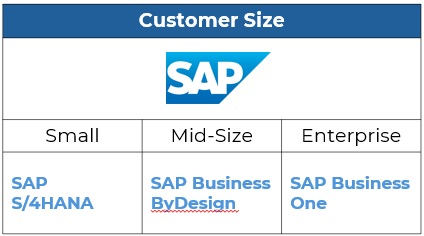
- Customer size: This is a fairly common approach to organizing one’s portfolio, especially in B2B and tech companies. For example, SAP has a different offering for large enterprises (SAP S/4 HANA), mid-size clients (SAP Business By Design) and small businesses (SAP Business One).
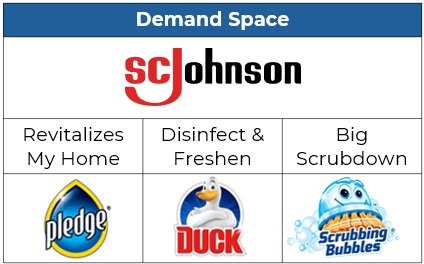
- Demand space: SC Johnson organizes its cleaning portfolio according to why the product is being used. Different product brands represent what the consumer is looking to do: whether it is revitalizing their home (Pledge), disinfecting & freshening (Duck), or doing a big scrub down (Scrubbing Bubbles).
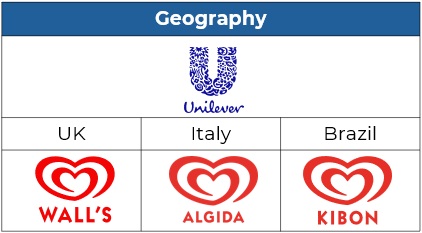
- Geography: Unilever’s ice-cream “Heartbrand” is organized by country. The company decided to keep its local brand names in each country but unified them visually under the same heart logo. So, there is Wall’s in the UK, Algida in Italy, and Kibon in Brazil.
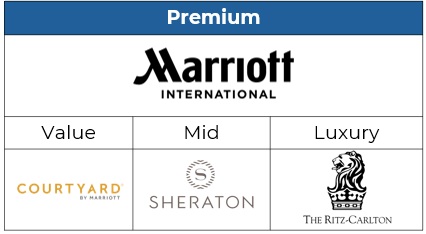
- Premium: There are many examples of companies that organize their portfolio according to the price level of their offerings. Marriott, for example, has separate hotel brands at the value end (Fairfield, Courtyard), the mid-level (Marriott, Sheraton), and at the luxury level (Ritz Carlton, St. Regis).

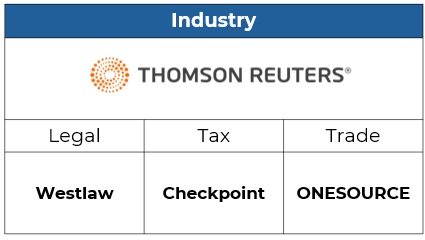
- Industry: Organizing one’s brand portfolio by vertical market is often seen in professional services companies. Thomson Reuters has different service brands for offerings in the legal profession (Westlaw) versus tax & accounting (Checkpoint) or trade (ONESOURCE).

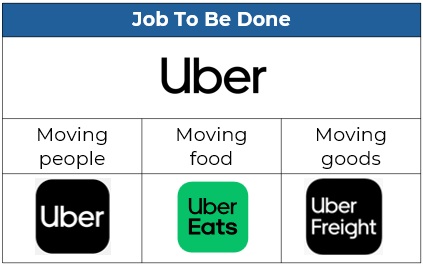
- Job to be done: Uber organizes its portfolio by use case, centered around the central idea of movement and access. Uber is for moving people, Uber Eats is for moving food and groceries, Uber Freight is for moving commercial goods, and Uber Health is for moving healthcare related services.
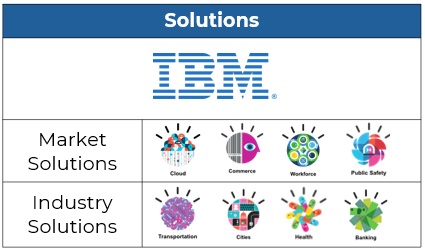
- Solutions: IBM, as we have seen, uses a matrix of market and industries to organize its portfolio, so that customers can buy solutions rather than hardware or software. Markets include Cloud, Analytics, and Security, while Industries include Healthcare, Banking, Automotive, Cities, and so on.
Too often, companies dive into a brand portfolio exercise only to identify which brands they need to get rid of, or to sort out messy logos. That should not be the driving force. The key is to start by understanding what customers will want in the future, and how they will think when making their decisions about where or whom to buy from. Then decide what the organizing principle should be, create the groupings that naturally arise from this organizing principle, deploy the existing products along the groupings, and then decide which existing products and brands to keep, shed or transition out, and which new products and brands might be needed.
Selecting the right organizing principle will lead customers to buy more, identify new product opportunities, and create marketing efficiencies—all leading to increased sales, profits and business value.
Reach out to us if you think your brand portfolio is sub-optimal.